



Look around you. That car in your driveway, the boat moored at the dock, the emergency light in the hallway, the golf cart zipping by, even the renewable energy system quietly powering a remote cabin—they all share a silent, steadfast heartbeat: the 12V Lead-Acid Battery. It’s a technology so ubiquitous, so reliable, that we often take it for granted until the day our car won’t start.
Yet, this unassuming box of energy is a marvel of electrochemical engineering, a testament to a design that has endured for over 160 years. On Simmytrified.com, we’re all about demystifying the tech that shapes our world, and today, we’re giving the 12V Lead-Acid Battery its well-deserved deep dive. We’ll explore how it works, why it’s still everywhere, how to care for it, and what the future holds for this classic workhorse.
Anatomy of a Classic – How It Actually Works
Let’s crack open the (metaphorical) case. A 12V Lead-Acid Battery isn’t a single cell; it’s a series of six 2V cells connected end-to-end, housed in a robust polypropylene case. Inside each cell, the magic happens:
-
The Plates: The heart of the reaction. You have positive plates coated in lead dioxide (PbO₂) and negative plates made of spongy lead (Pb). These are arranged in alternating layers, separated by insulating dividers to prevent short circuits.
-
The Electrolyte: This is the bath in which the plates sit—a solution of about 35% sulfuric acid (H₂SO₄) and 65% water. This liquid is the crucial medium that allows ions to flow.
-
The Chemical Waltz (Discharging): When you connect a load (like a car starter), a chemical reaction begins. The acid (sulfate ions) reacts with the materials on both plates. The lead dioxide and spongy lead both transform into lead sulfate (PbSO₄), and water is released into the electrolyte. This process releases electrons, which rush through your circuit, providing electrical current. As this happens, the electrolyte becomes less dense (more water, less acid).
-
The Chemical Waltz (Charging): Apply an external voltage higher than 12V (like from an alternator or charger), and you reverse the reaction. The lead sulfate on the plates is driven back to lead dioxide (positive) and spongy lead (negative). The sulfate recombines with the water to re-form sulfuric acid, making the electrolyte more dense again.
This “double sulfate” theory is the elegant, reversible reaction that makes the battery rechargeable. Its simplicity and use of inexpensive, readily available materials (lead and acid) are foundational to its success.
A Family Tree – Types of 12V Lead-Acid Battery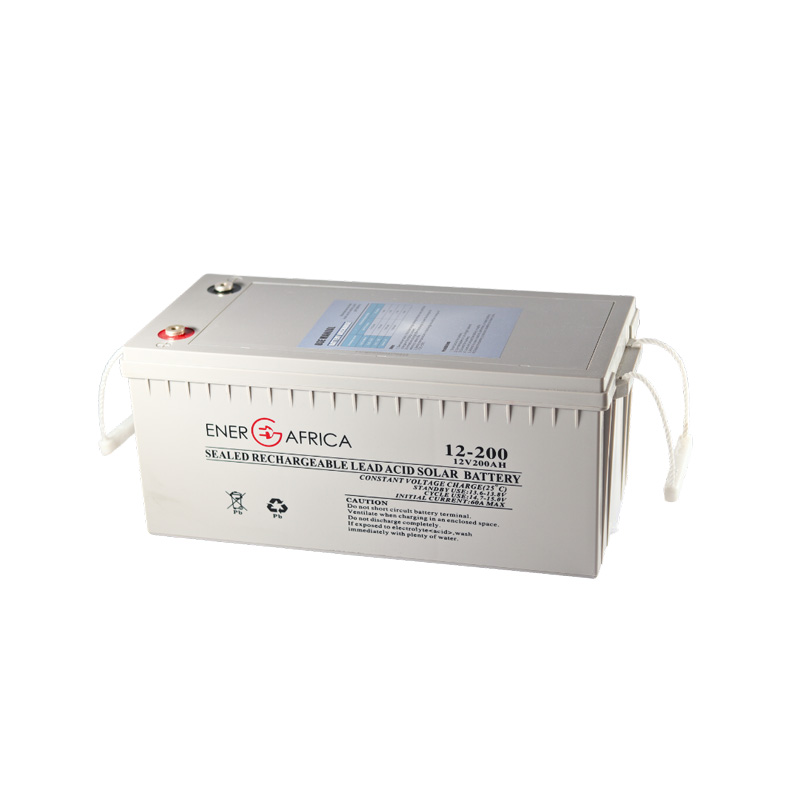
Not all 112V Lead-Acid Battery are created equal. They’re engineered for different purposes, falling into two main lineages:
1. Flooded (or Wet Cell) Lead-Acid (FLA):
This is the classic, original design. The plates are fully immersed in liquid electrolyte. They feature removable caps to allow for the addition of distilled water to compensate for water lost during charging (electrolysis). They are the most economical and robust for many applications but require maintenance and must be kept upright to prevent leakage.
-
Starting, Lighting, and Ignition (SLI): This is your standard car battery. It’s designed to deliver a very high burst of current (Cold Cranking Amps – CCA) for a few seconds to start an engine. It has many thin plates for maximum surface area. SLI batteries don’t like being deeply discharged regularly.
-
Deep Cycle: Built for endurance, not sprinting. These have thicker, more solid plates designed to be discharged down to 20% or less of their capacity and then recharged, cycle after cycle. They deliver a lower, steady current over many hours. Think trolling motors, golf carts, and floor scrubbers.
2. Sealed Lead-Acid (SLA) / Valve-Regulated Lead-Acid (VRLA):
This is the maintenance-free evolution. The electrolyte is immobilized, either by being absorbed into a fiberglass mat or suspended in a gel. They are sealed but have a pressure relief valve for safety (hence VRLA).
-
Absorbent Glass Mat (AGM): The superstar of modern applications. The electrolyte is held in a fine fiberglass mat sandwiched between the plates. This makes them spill-proof, highly vibration-resistant, and capable of delivering very high currents. They have low internal resistance, charge faster, and have a longer lifespan than FLAs when maintained properly. Used in high-performance cars, motorcycles, UPS systems, and premium renewable energy setups.
-
Gel Cell: The electrolyte is turned into a gel-like substance with silica. They are exceptionally resistant to deep discharge and are very good for long-term, low-power applications or where extreme deep cycling is needed. However, they are sensitive to overcharging and require specific charge profiles. Common in medical devices and wheelchairs.
Choosing the right type is critical. Putting an SLI battery in a deep-cycle application will kill it quickly. Using a flooded battery in a sensitive electronic device prone to tipping is a bad idea.
The King of Applications – Why It’s Everywhere
Why has this 19th-century technology survived the silicon and lithium revolution? Because for many roles, it remains the optimal solution. Here’s its domain:
-
Automotive & Transportation: The undisputed king. Every conventional car, truck, and motorcycle uses a 12V SLI (often AGM now) battery. It’s the buffer for the alternator, powering electronics when the engine is off and delivering the critical starting crank.
-
Backup Power & UPS: From the tiny unit protecting your desktop PC to massive banks in data centers, VRLA (mostly AGM) batteries provide critical minutes of power during an outage, allowing for safe shutdown or generator start-up.
-
Marine & RV: A hybrid need exists here. Dual-purpose or dedicated deep-cycle batteries (often AGM for safety) power the “house” loads (lights, fridge, pumps) while separate SLI batteries start engines.
-
Renewable Energy Storage: For off-grid or backup solar systems, deep-cycle flooded or AGM batteries are a cost-effective way to store energy from solar panels. Their ability to handle daily charge/discharge cycles makes them ideal, despite the maintenance (for FLAs).
-
Wheeled & Motive Power: Golf carts, forklifts, floor cleaners, and disability scooters almost exclusively use deep-cycle lead-acid batteries for their torque, safety, and cost profile.
-
Portable Power & Toys: Electric ride-on toys for kids, portable lighting, and camping power packs often use smaller SLA batteries for safety and simplicity.
The formula is unbeatable: Low upfront cost + Proven safety + High recyclability + Availability = Market dominance in these areas.
Care & Feeding – Maximizing Life and Performance
A 12V Lead-Acid Battery isn’t a “fit and forget” device (even “maintenance-free” ones). Treat it right, and it will serve you for years. Neglect it, and it will fail prematurely.
1. The Charging Sacred Ritual: This is the most critical factor.
-
Use the Right Charger: A smart, multi-stage charger is an investment that pays for itself. It applies a bulk charge (constant current), then a absorption charge (constant voltage to top off), and finally a float charge (a lower voltage to maintain without overcharging). This prevents sulfation and gassing.
-
Avoid the Dreaded State of Discharge: Never leave a lead-acid battery in a discharged state. Sulfation—where lead sulfate crystals harden and won’t re-dissolve—begins immediately and becomes permanent, killing capacity.
-
Prevent Overcharging: This cooks the battery, causing excessive gassing, water loss (in FLAs), and heat damage. A good regulator/charger is essential.
2. Maintenance (For Flooded Batteries):
-
Watering: Regularly check electrolyte levels and top up only with distilled water to just above the plates. Do this after a full charge, not before.
-
Cleaning: Keep terminals clean and tight. Corrosion (that blue-green powder) is your enemy. A paste of baking soda and water neutralizes acid, and terminal protector spray prevents future corrosion.
3. Storage:
-
The Golden Rule: Store fully charged, in a cool, dry place. For long storage, connect a float charger or battery maintainer (a trickle charger that turns on/off automatically) to counter self-discharge. Never store a battery discharged.
4. Safety First:
-
Acid is Corrosive: Wear gloves and eye protection when handling FLAs.
-
Explosive Gases: Charging, especially at the end, produces hydrogen and oxygen. VENTILATION IS NON-NEGOTIABLE. No sparks or flames nearby.
-
Short Circuits: A wrench across the terminals can deliver hundreds of amps, melting metal and causing severe burns or fire. Always be mindful.
Facing the Future – The Challenges and Competition
No technology is perfect. The lead-acid battery has drawbacks:
-
Low Energy Density: It’s big and heavy for the amount of energy it stores (Wh/kg). You wouldn’t want one in your smartphone.
-
Limited Cycle Life: Even deep-cycle variants have a few hundred to a thousand cycles, far less than some alternatives.
-
Environmental Handling: While highly recyclable (>99% in many regions), improper disposal leads to lead and acid pollution.
-
Maintenance: Requires attention, especially flooded types.
Enter the challenger: Lithium-ion (Li-ion), specifically Lithium Iron Phosphate (LiFePO4). For 12V applications, LiFePO4 drop-in replacements are now widely available. They are lighter, have a much longer cycle life, require no maintenance, can be discharged more deeply without harm, and charge faster.
So, is lead-acid obsolete? Absolutely not. Here’s why:
-
Cost: Lead-acid remains significantly cheaper upfront, often 1/3 to 1/2 the price of a comparable LiFePO4 battery.
-
Safety & Robustness: Lead-acid is tolerant of overcharge/over-discharge abuse that would destroy a Li-ion battery. It’s also less prone to catastrophic thermal runaway.
-
Recyclability: The lead-acid recycling pipeline is a closed-loop, highly efficient model. Lithium battery recycling is still scaling up.
-
Cold Cranking Performance: A quality SLI lead-acid battery is still hard to beat for raw, instant starting power in freezing conditions.
The future is likely one of coexistence, not replacement. For cost-sensitive, high-power, or easily recyclable applications, lead-acid will reign. For premium, weight-sensitive, or high-cycle-demand applications, LiFePO4 will take an increasing share. The lead-acid battery will continue to evolve, with improvements in carbon-enhanced plates (to mitigate sulfation) and design refinements.
READ ALSO:
- The Ultimate Guide to Choosing the Best Solar Inverter for Home
- 4.3KVA Hybrid Solar Inverter: Complete Guide for Small Business and Remote Site Applications
- The Ultimate Guide to the Best Solar Inverter for Your Home
Conclusion: An Enduring Legacy of Power
The 12V Lead-Acid Battery is a cornerstone of our electrified society. It’s a masterpiece of pragmatic engineering—not the flashiest or most advanced, but one of the most dependable, economical, and recyclable energy storage devices ever invented. Understanding its types, its needs, and its strengths empowers you to make smarter choices for your vehicles, your backup systems, and your projects.
Next time you turn a key and hear an engine roar to life, take a mental moment to appreciate the complex chemical dance happening in that humble box under the hood. It’s a dance that’s been going strong for over a century and a half, and it’s not stopping anytime soon. On Simmytrified.com, we celebrate these pillars of technology—the simple, the robust, and the utterly essential.
Got a project or a battery question? Share your thoughts and experiences in the comments below! Let’s get the discussion charged up!