



Welcome to Simmytrified, where we untangle the threads of modern technology and sustainable living. Today, we’re stepping outside to explore a innovation that is quietly revolutionizing our public spaces, our security, and our planet’s health: the LED Solar Street Light.
You’ve likely seen them—elegant, standalone light poles, often with a sleek solar panel perched on top, casting a bright, white glow on pathways, roads, and parks after dark. But what makes them tick? And more importantly, why are they such a monumental upgrade over the orange-hued, grid-tied street lights of the past?
This isn’t just a story about a different kind of bulb. It’s a story about a powerful synergy between two transformative technologies: the ultra-efficiency of LEDs and the clean, independent power of Solar. Together, they create a lighting solution that is smarter, simpler, and profoundly sustainable.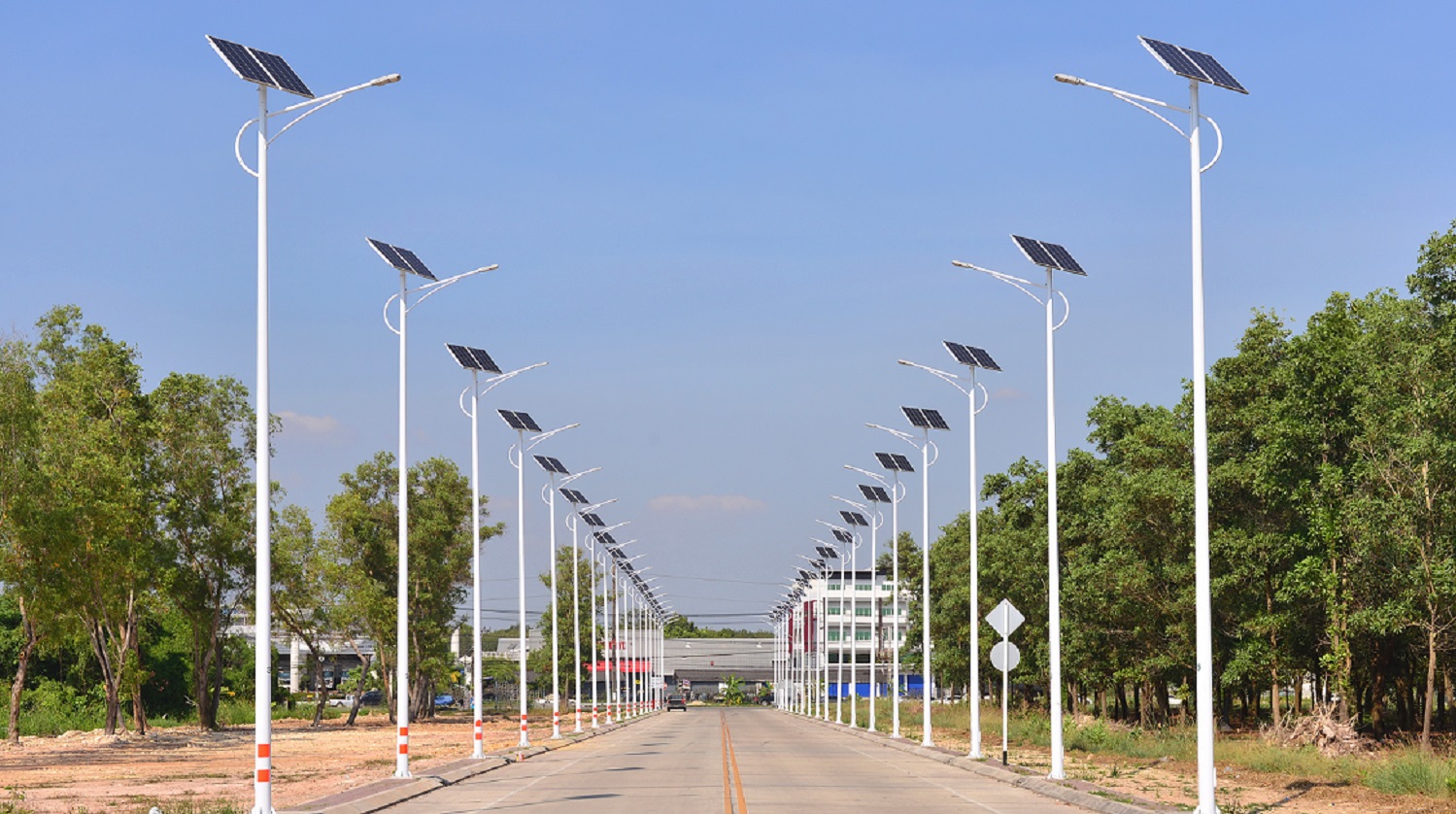
In this definitive guide, we will dive deep into the world of LED solar street lights. We’ll dissect the technology, celebrate the immense benefits, tackle your practical concerns, and explore how this combination is lighting the path to a brighter, more resilient future.
Beyond the Bulb: What is an LED Solar Street Light?
An LED Solar Street Light is a fully integrated, off-grid lighting system. It’s a perfect marriage of three core components:
-
The LED Luminaire: The light source itself, using Light Emitting Diodes (LEDs) to produce illumination.
-
The Solar Power System: Comprising a photovoltaic (PV) panel to capture sunlight and a battery to store the energy.
-
The Intelligent Controller: The “brain” that manages the energy flow, protects the components, and automates operation.
Unlike a simple solar light you might put in your garden, these are robust, engineered systems designed for high-output, all-weather, and long-duration performance. They represent a complete departure from the 20th-century model of public lighting.
The Power of Two: Why LED and Solar are a Match Made in Heaven
To understand why this combination is so powerful, let’s look at the weaknesses of the old system and how LED-Solar solves them.
The Old Way: High-Pressure Sodium (HPS) Lamps & The Grid
For decades, our streets were lit by HPS lamps. They were inefficient, consuming a large amount of grid electricity (often from fossil fuels) to produce a relatively dim, orange-yellow light. They had short lifespans, required frequent maintenance, and were tied to an expensive, vulnerable infrastructure of underground cables and centralized control.
The New Paradigm: A Symbiotic Relationship
The success of solar street lighting is entirely dependent on energy efficiency. You can’t power an energy-hungry HPS lamp with a reasonably sized solar panel and battery. This is where the LED comes in as the hero of our story.
-
LEDs are Incredibly Efficient: LEDs produce more lumens (brightness) per watt than any other common lighting technology. A 60W LED can easily outperform a 150W HPS lamp, providing brighter, clearer light for less than half the energy.
-
This Efficiency Unlocks Solar Viability: Because LEDs use so little power, a standard solar panel and battery combination can easily power them for an entire night, plus have backup for cloudy days. If we tried to run an HPS lamp on solar, the system would need to be impractically large and expensive.
In short, LED technology makes solar street lighting practical and affordable. Without the LED, solar street lights would be a niche, underperforming novelty. With it, they are a dominant, superior solution.
A Deep Dive into the Components: The Anatomy of an LED Solar Street Light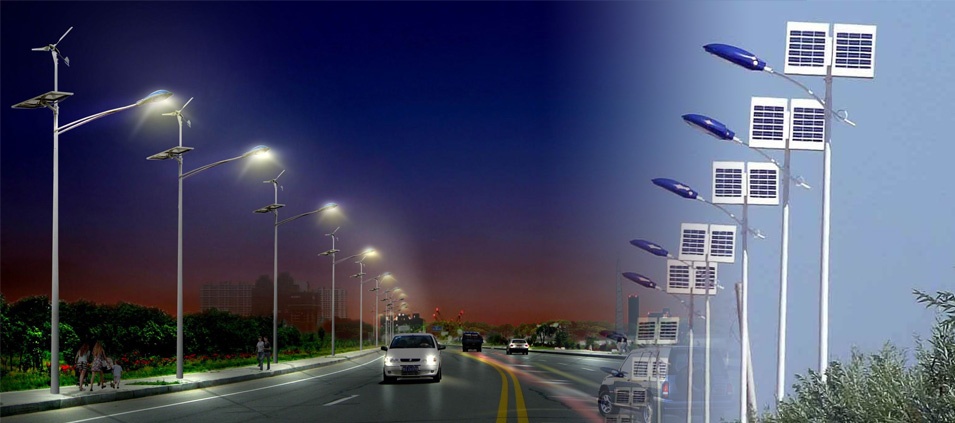
Let’s break down the system into its core components to understand the magic.
1. The LED Luminaire: The Heart of Modern Light
The LED light fixture is more than just a cluster of bulbs. It’s an engineered optical system.
-
LED Chips: The source of light. Quality lights use branded, high-lumen LED chips (like Philips Lumileds, CREE, or Bridgelux) known for their longevity and consistent output.
-
Heat Sink: LEDs are efficient, but they do generate heat. A large, often aluminum, heat sink draws this heat away from the chips, preventing overheating and ensuring a long lifespan (often 50,000-100,000 hours).
-
Optical Lens/Reflector: This component shapes and directs the light beam. Modern “cut-off” optics prevent light pollution and “glare” by focusing the light downward onto the street or pathway, exactly where it’s needed. This is a major safety and comfort improvement over the scattered light of old HPS fixtures.
2. The Solar Photovoltaic Panel: The Energy Harvester
This is the system’s fuel pump. It converts sunlight into electricity.
-
Types: Monocrystalline Silicon panels are the standard for high-quality systems due to their high efficiency (often 20%+), meaning they convert more sunlight into electricity in a given surface area.
-
Integration: Panels can be mounted separately on the pole or integrated directly into the luminaire for a sleeker, more vandal-resistant design.
3. The Battery: The Energy Reservoir
This is where the sun’s energy is stored for the night. The battery is the component that has seen the most significant evolution.
-
Lead-Acid (The Legacy Tech): Cheaper upfront but bulkier, heavier, has a shorter lifespan (2-3 years), and requires more maintenance. Not ideal for a “set-and-forget” solution.
-
Lithium-Ion, especially LiFePO4 (The New Standard): This is what you want. LiFePO4 (Lithium Iron Phosphate) batteries are lighter, more compact, have a much longer lifespan (5-8 years, matching the LEDs), offer greater depth of discharge, and are maintenance-free. They are the key to a reliable, long-lasting system.
4. The Intelligent Controller: The Brain and Nervous System
This small circuit board is the command center. Its functions are critical:
-
Automatic On/Off: Uses a photocell to detect dusk and dawn.
-
Battery Management: It prevents overcharging during the day and deep discharge at night, which are the two main killers of batteries.
-
Smart Energy Modes (The Game-Changer): This is where it gets truly smart. The controller can be programmed to:
-
Run at full power for a set period (e.g., 6 PM – 11 PM, when traffic is high).
-
Dim to 30-50% power for the rest of the night (e.g., 11 PM – 6 AM), conserving energy and ensuring light until morning.
-
Incorporate Motion Sensors: During dimming hours, the light can burst to 100% brightness when it detects movement, enhancing security while maximizing energy savings.
-
The Unbeatable Benefits: Why You Should Make the Switch
The technical details are impressive, but the real-world benefits are what make LED solar street lights a compelling choice for communities, businesses, and homeowners.
1. Dramatic Financial Savings
-
Zero Electricity Bills: The energy from the sun is free. For a municipality, this can save thousands, even millions, annually on public lighting costs.
-
No Trenching or Cable Costs: Installation is simple and fast. You need a concrete foundation and the pole. There’s no need to dig up miles of roadway to lay expensive copper cabling. Installation costs can be 60-80% lower than grid-tied alternatives.
-
Minimal Maintenance: With no external wiring to fault and long-life LEDs and LiFePO4 batteries, maintenance is drastically reduced. There are no bulbs to replace annually and no grid-related outages to troubleshoot.
2. Superior Environmental Credentials
-
100% Renewable Energy: Each light is a mini power station, operating entirely on clean energy.
-
Significant Carbon Reduction: By displacing grid electricity, each light prevents tonnes of CO2 emissions over its lifetime.
-
Reduced Light Pollution: The focused, downward-facing beams of LED optics ensure light goes where it’s needed, not into the night sky or nearby bedroom windows.
3. Unmatched Resilience and Reliability
-
Grid Independence: When storms, accidents, or blackouts hit the central grid, LED solar street lights keep shining. They provide critical light for safety and security when it’s needed most, building community resilience.
-
Rapid Deployment: They are the perfect solution for disaster relief, temporary sites, or new developments where grid connection is slow or costly.
4. Enhanced Safety and Security
-
Excellent Light Quality: The bright, white light of LEDs offers superior Color Rendering Index (CRI). This means colors and objects are seen more accurately and clearly, improving driver and pedestrian safety.
-
Consistent Operation: Automated, weather-proof operation guarantees illumination every single night.
-
Motion-Sensor Capability: The ability to brighten upon detecting movement acts as a powerful criminal deterrent and provides reassurance for residents.
Addressing Common Concerns and Myths
Let’s tackle the questions we know are on your mind.
1. “What about long periods of cloudy weather?”
Modern systems are designed with “Days of Autonomy.” A quality LED solar street light is engineered to operate for 3-5 consecutive rainy/cloudy days without sunlight. It does this by harvesting extra energy on sunny days and using smart dimming to conserve power when solar input is low.
2. “The upfront cost is too high.”
This is the most common hurdle, but it’s based on a narrow view. The correct way to evaluate cost is Total Cost of Ownership (TCO). While the initial unit price may be higher, the savings from $0 electricity bills, $0 trenching, and minimal maintenance mean the system typically pays for itself within 3-7 years. After that, it’s virtually free to operate for the rest of its long life.
3. “LED light is too harsh or cold.”
This was true of early LEDs. Today, you can choose the Correlated Color Temperature (CCT). A warm white (2700K-3000K) is cozy and residential, while a natural white (4000K-5000K) is excellent for security and roadway visibility, providing clear, alertness-boosting light without the harsh blue tones of very high CCTs.
4. “Battery disposal must be an environmental problem.”
This is a valid concern. The industry is addressing it. LiFePO4 batteries are non-toxic and contain no heavy metals like lead or cadmium. Furthermore, established recycling streams for lithium-ion batteries are growing rapidly, ensuring these components are responsibly handled at end-of-life.
A Buyer’s Guide: Choosing the Right LED Solar Street Light
Ready to invest? Here’s what to look for to ensure you get a quality, long-lasting product.
-
Lumen Output: Don’t focus on Watts; focus on Lumens. For a residential street, 6,000 – 10,000 lumens is often sufficient. For a main road, you may need 15,000+.
-
Color Temperature (CCT): Choose a CCT that suits the application. 3000K-4000K is a safe, popular range for most public spaces.
-
Battery Specification: Insist on a Lithium-Ion (LiFePO4) battery. Check its capacity (in Watt-hours or Amp-hours) to understand its backup capability.
-
Solar Panel Wattage & Efficiency: A higher-wattage, monocrystalline panel will charge the battery faster and more effectively.
-
IP & IK Ratings:
-
IP65 Rating (Ingress Protection): Essential. This means the unit is totally dust-tight and protected against water jets.
-
IK08+ Rating (Impact Protection): This means the fixture can withstand physical impacts of 5 joules or more, crucial for vandal resistance.
-
-
Smart Controller Features: Ensure it has programmable dimming schedules. Motion sensor capability is a valuable bonus.
-
Warranty: A reputable manufacturer will offer a strong warranty, typically 5 years on the entire system and up to 8 years on the LiFePO4 battery.
The Future is Bright and Connected
The evolution of the LED solar street light is far from over. We are moving into the era of the Smart Solar Light.
-
IoT Integration: Each light pole can become a smart city node, equipped with sensors to monitor air quality, noise levels, traffic flow, and parking space availability.
-
Networked Control: Lights can be connected via mesh networks (like LoRaWAN or 4G/5G), allowing a central manager to monitor the performance of every light, receive fault alerts, and adjust lighting schedules remotely.
-
Additional Services: Future poles may integrate public Wi-Fi, emergency call buttons, security cameras, and even electric vehicle (EV) charging ports.
READ ALSO:
- The Ultimate Guide to Off-Grid Solar Inverters: Your Key to True Energy Independence
- The Ultimate Guide to Choosing the Best Solar Inverter for Home
- The Ultimate Guide to 24-Hour CCTV Surveillance Systems: Protecting What Matters, Day and Night
Conclusion: Lighting the Way Forward
The LED solar street light is a quintessential Simmytrified technology. It takes a complex challenge—public lighting—and solves it with a solution that is elegantly simple, profoundly sustainable, and intelligently automated.
It cuts the cord, both literally and figuratively, freeing us from outdated infrastructure, volatile energy costs, and a significant environmental burden. It represents a shift toward decentralized, resilient, and human-centric urban design.
Whether you are a city council member planning a new subdivision, a business owner lighting a parking lot, or a homeowner securing a driveway, the choice is clear. By choosing LED solar street lights, you are not just installing a light; you are investing in a smarter, safer, and greener future for everyone.
We’d love to hear from you! Has your community adopted LED solar street lights? What has your experience been? Share your thoughts and questions in the comments below, and let’s keep the conversation illuminated.