



Here at Simmytrified, we’re obsessed with solutions that make life smarter, simpler, and more sustainable. We often focus on the tech inside our homes, but what about the world just outside our front doors? Imagine a community where streets, pathways, and parks are bathed in a clean, consistent glow, entirely independent of the traditional power grid. A light that comes on as dusk falls, powered by the sun’s abundant energy, with no monthly electricity bill and a minuscule carbon footprint.
This isn’t a futuristic dream. It’s the reality offered by Solar Street Light With Pole and Battery.
In this ultimate guide, we’re going to demystify this incredible technology. We’ll break down how they work, explore their undeniable benefits, address the common questions and concerns, and look at why they are a cornerstone of smart, sustainable urban and rural development. Let’s shine a light on why solar street lighting is a game-changer.
What Exactly is a Solar Street Light With Pole and Battery?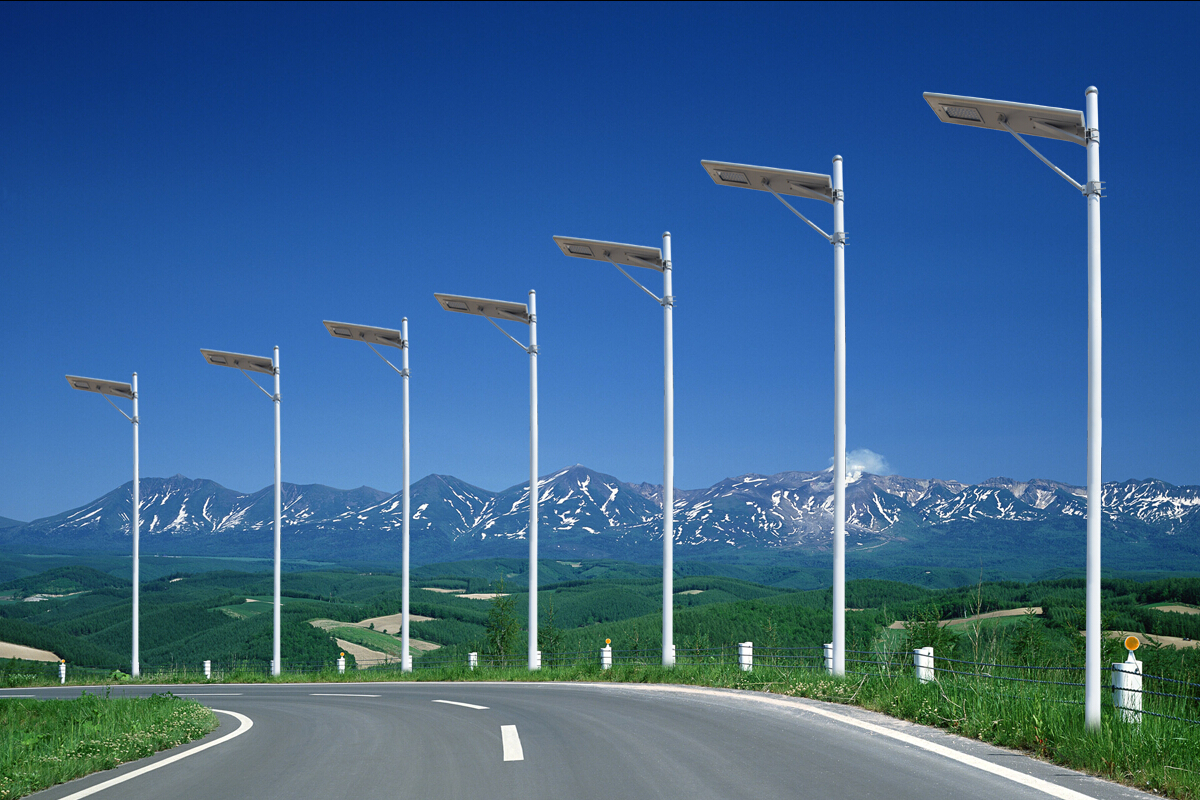
At its core, a Solar Street Light With Pole and Battery is a raised source of light powered by a photovoltaic (PV) panel, mounted on the lighting structure or integrated into the pole itself. It’s a self-contained, off-grid lighting system that captures solar energy during the day, stores it in a battery, and uses it to power an LED light fixture at night.
Think of it as a miniature, intelligent power station dedicated solely to lighting your path. Unlike a traditional street light that requires extensive trenching, cabling, and connection to the often fossil-fuel-dependent grid, a Solar Street Light With Pole and Batteryis a testament to elegant, standalone efficiency.
How Do Solar Street Light With Pole and Battery? The Magic, Demystified.
The operation of a Solar Street Light With Pole and Battery is a beautiful dance between several key components, working in harmony. It’s a closed-loop system of capture, store, and deliver. Here’s a step-by-step breakdown:
1. The Photovoltaic (PV) Solar Panel: The Energy Harvester
This is the starting point—the business end of the entire operation. The solar panel is made up of silicon cells that convert sunlight directly into Direct Current (DC) electricity. The efficiency and size of this panel determine how much energy can be harvested. Modern solar street lights typically use high-efficiency monocrystalline panels, known for their superior performance in a range of light conditions.
2. The Battery: The Energy Vault
The electricity generated by the solar panel doesn’t get used right away; it needs to be stored for use at night. This is the battery’s job. It stores the DC power until it’s needed. The type of battery is crucial for the light’s longevity and reliability.
-
Lead-Acid Batteries: The older, cheaper technology, but they are bulkier, have a shorter lifespan, and require more maintenance.
-
Lithium-Ion (Li-ion) Batteries: The new standard. They are lighter, more compact, have a much longer lifespan (5-8 years), offer better depth of discharge, and require zero maintenance. For a “simmytrified” solution, Li-ion is almost always the way to go.
3. The LED Light Fixture: The Efficient Illuminator
When the sun goes down, the stored energy powers the light. Solar Street Light With Pole and Battery almost exclusively use LED (Light Emitting Diode) technology. Why? Because LEDs are incredibly energy-efficient, producing more lumens (brightness) per watt than traditional bulbs. This means you get a brilliant, clear light for a fraction of the energy cost, allowing the system to run longer on a single battery charge. They also have a very long operational life, often exceeding 50,000 hours.
4. The Smart Controller: The Brain of the Operation
This is the component that makes it all “smart.” The controller manages the entire system, protecting the battery and optimizing performance. Its primary functions include:
-
Overcharge Protection: It stops the solar panel from charging the battery once it’s full, preventing damage.
-
Low-Voltage Disconnect (LVD): It automatically cuts power to the LED when the battery is low, preventing deep discharge that can permanently kill the battery.
-
Automatic On/Off Switching: Using a light sensor (photocell), the controller turns the light on at dusk and off at dawn, fully autonomously.
-
Smart Timing & Dimming: Advanced controllers can be programmed to run the light at 100% brightness for a set number of hours (e.g., until midnight) and then dim to 50% or 30% for the rest of the night, conserving energy and extending battery life. Some even have motion sensors for an extra boost when activity is detected.
5. The Pole and Hardware: The Sturdy Foundation
A robust pole holds all these components at the necessary height for optimal street lighting. It often includes brackets for the solar panel, a housing unit for the battery and controller, and the fixture for the LED lamp.
The Daily Cycle in a Nutshell:
-
DAYTIME: Sunlight hits the solar panel → DC electricity is generated → Controller directs this electricity to charge the battery.
-
NIGHTTIME: The photocell detects darkness → Controller activates the circuit → Stored energy from the battery powers the bright LED light.
-
REPEAT: The cycle continues day after day, year after year.
Why Make the Switch? The Compelling Benefits of Solar Street Light With Pole and Battery
The “how” is impressive, but the “why” is truly transformative. The advantages of switching to Solar Street Light With Pole and Battery extend far beyond just saving on electricity bills.
1. Massive Cost Savings and Economic Sense
-
Zero Electricity Bills: The sun doesn’t send an invoice. Once installed, the operational energy cost is literally zero. For municipalities and large communities, this translates to massive savings on public lighting expenses.
-
Elimination of Trenching and Cabling: Traditional grid-tied lighting requires extensive and expensive underground cabling. This involves digging trenches, laying conduit, and restoring the landscape. Solar lights are “plug-and-play”; they only need a concrete foundation for the pole. This drastically reduces installation costs by up to 80%.
-
Low Maintenance: With no external wiring vulnerable to wear, tear, or corrosion, and with long-lasting LED and Li-ion battery components, maintenance is minimal. There’s no need to deal with cable faults or grid outages.
2. Environmental Champion: A Greener Footprint
-
100% Renewable Energy: They operate entirely on clean, green solar power.
-
Reduced Carbon Emissions: By displacing grid electricity, which is often generated from coal or natural gas, each solar street light prevents a significant amount of CO2 from entering the atmosphere.
-
Light Pollution Reduction: Many models are designed with focused, downward-facing LEDs and shields to minimize “light trespass” (light going where it’s not needed) and skyglow, preserving the night sky.
3. Unmatched Reliability and Resilience
-
Energy Independence: The grid can fail. Storms, accidents, overloads, and blackouts can plunge neighborhoods into darkness. Solar street lights are immune to these disruptions. They create a resilient, decentralized lighting network that keeps communities safe even when the central grid is down.
-
Perfect for Remote Locations: This is one of their strongest suits. If a location is expensive or physically impossible to connect to the grid, solar lighting is the perfect, often the only, viable solution. This is transformative for rural roads, remote villages, and developing regions.
4. Enhanced Safety and Security
-
Consistent Illumination: Well-lit streets deter crime and reduce traffic accidents. The reliability of solar lights ensures that public spaces remain illuminated every single night.
-
Automatic Operation: There is no human error or forgotten light switches. The smart controller ensures the lights are on when they are needed most.
5. Scalability and Smart City Integration
Adding a new Solar Street Light With Pole and Battery is as simple as installing a new pole. There’s no need to calculate grid load or run new cables from a central point. This makes scaling up lighting infrastructure incredibly easy. Furthermore, modern solar street lights can be integrated with IoT (Internet of Things) sensors, becoming nodes in a smart city network, capable of monitoring air quality, traffic, weather, and more.
Addressing the Elephant in the Room: Common Concerns and Myths
No technology is perfect, and it’s important to have a balanced view. Let’s tackle the most common concerns head-on.
1. “What happens when it’s cloudy or rainy for several days?”
This is the number one question. Modern solar street lights are designed with this in mind.
-
Battery Backup: Systems are engineered to have a battery capacity that can provide illumination for 3-5 autonomous days (often referred to as “days of autonomy”). They harvest extra energy on sunny days to create a reserve for cloudy periods.
-
Smart Energy Management: The dimming features we discussed earlier are key here. The controller can be programmed to conserve energy during periods of low solar harvest, ensuring at least some level of illumination is maintained throughout multiple cloudy days.
2. “The initial investment is too high.”
While the upfront cost per unit for a quality solar street light can be higher than a traditional lamp post, the Total Cost of Ownership (TCO) is almost always lower. When you factor in the massive savings from zero electricity bills, zero trenching/cabling costs, and drastically reduced maintenance over a 5-10 year period, solar almost always comes out as the more economical choice.
3. “They don’t last very long, especially the battery.”
This was a valid concern a decade ago. Today, with Lithium-Ion (specifically LiFePO4) batteries, this is less of an issue. A quality Li-ion battery can last 5-8 years, which often aligns with the lifespan of the LED itself. The solar panels typically have a 20-25 year warranty. Choosing a reputable supplier with high-quality components is the key to long-term satisfaction.
4. “The light output isn’t as strong as traditional lights.”
This is a myth. Modern solar LED street lights can produce a wide range of lumens, easily matching or exceeding the brightness of traditional 100W-400W High-Pressure Sodium (HPS) lights while consuming a fraction of the energy. The crisp, white light of LEDs also provides better color rendering, making it easier for drivers and pedestrians to see clearly.
Choosing the Right Solar Street Light With Pole and Battery: A Simmytrified Buyer’s Guide
If you’re considering solar street lights for your community, driveway, or commercial property, here’s what to look for:
-
Lumen Output, Not Watts: Focus on lumens, which measure brightness, not watts, which measure energy consumption. Determine the required brightness for your area (e.g., a pathway vs. a main road).
-
Battery Type and Capacity: Insist on Lithium-Ion (preferably LiFePO4). Check the battery capacity (in Wh – Watt-hours or Ah – Amp-hours) to understand the backup duration.
-
Solar Panel Efficiency: Monocrystalline panels are the gold standard. A larger, more efficient panel will charge the battery faster and more effectively.
-
Degree of Protection (IP & IK Ratings):
-
IP Rating: Look for at least IP65 for dust and water resistance.
-
IK Rating: Look for IK08+ for resistance to physical impacts.
-
-
Smart Features: A controller with dimming and timing schedules is a must for energy efficiency. Motion sensor capabilities are a valuable bonus.
-
Warranty and Supplier Reputation: A strong warranty (5+ years on the battery and components) is a sign of a quality product. Buy from established, reputable companies that provide technical support.
The Future is Bright: What’s Next for Solar Street Lighting?
The technology isn’t standing still. The future of solar street lighting is even more intelligent and integrated.
-
Integrated PV Panels: We’re seeing a shift towards panels that are seamlessly integrated into the design of the light fixture, making them more aesthetically pleasing and robust.
-
Advanced IoT and Smart City Connectivity: Future lights will act as hubs for smart city data, equipped with cameras, security sensors, EV charging ports, and environmental monitors, all communicating via 5G or LPWAN networks.
-
AI-Powered Energy Management: Artificial Intelligence will optimize charging and discharging cycles based on weather forecasts and historical usage patterns, maximizing efficiency and battery life.
-
Improved Battery Technology: Solid-state batteries are on the horizon, promising even greater energy density, safety, and lifespan.
READ ALSO:
- The Unsung Hero of Modern Life: A Deep Dive into the 12V Lead-Acid Battery
- LED Solar Street Lights: The Definitive Guide to Smarter, Greener Illumination
- The Ultimate Guide to Off-Grid Solar Inverters: Your Key to True Energy Independence
Conclusion: A Brighter, Smarter, and More Sustainable Path Forward
Solar Street Light With Pole and Battery is more than just a niche alternative; it’s a paradigm shift in how we think about public infrastructure. It represents a move towards decentralization, resilience, and environmental responsibility.
It aligns perfectly with the Simmytrified philosophy: leveraging smart technology to create solutions that are not only effective but also simple, sustainable, and empowering. By cutting the cord, we free ourselves from grid dependency, volatile energy costs, and a significant portion of our carbon footprint.
Whether you’re a city planner, a community leader, or a homeowner looking to light up your driveway, the case for solar street lights is stronger and brighter than ever. It’s a clear, practical, and powerful step towards illuminating our communities with the clean, boundless energy of the sun.
Have you had any experience with Solar Street Light With Pole and Battery in your community? We’d love to hear your thoughts and questions in the comments below! Let’s discuss the future of light.